Preparing a South Africa Critical Skills Visa can feel overwhelming when the process lives across emails, PDFs, and scattered notes.
That creates risk for everyone involved.
— Travellers can miss a required step.
— Mobility teams can lose time across multiple cases.
— Legal practitioners can end up reviewing incomplete files.
The better approach is structure.
From a global mobility perspective, a visa case needs predictable movement from assessment to submission.
From a legal immigration process perspective, every requirement must be supported by the right evidence.
From a technology and case management perspective, the file should live in one controlled system.
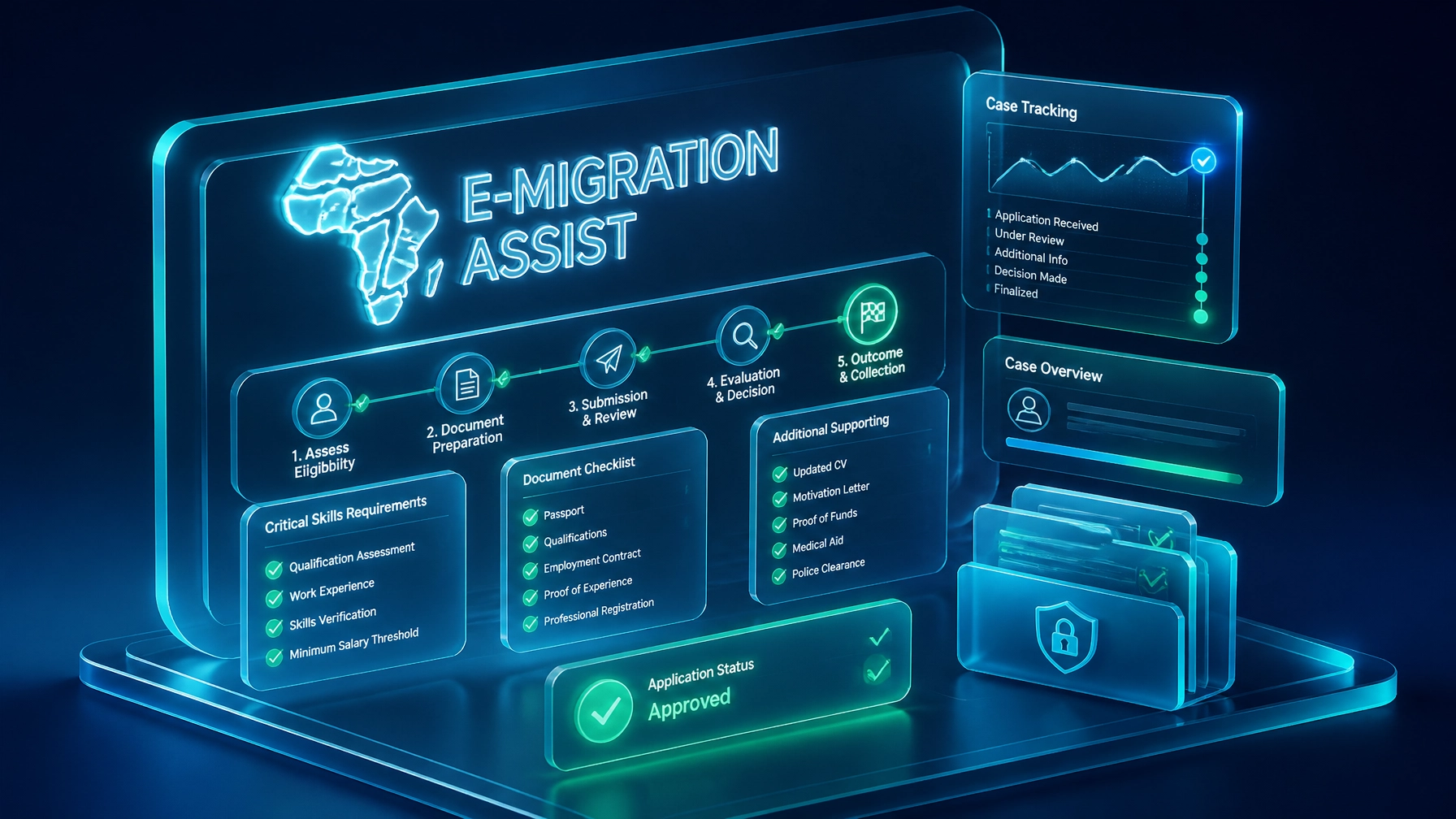
At E-Migration Assist, we focus on practical control. We replace fragmented admin with guided workflows, secure document handling, and clear tracking.
Here are seven common mistakes in Critical Skills Visa preparation, and a more structured way to handle each one.
1. Using the Wrong Occupation Classification
A common problem starts with role matching. A job title on its own is not enough. The occupation description, duties, and supporting documents all need to line up.
: The Problem: A role is classified too broadly or mapped to the wrong occupation category. That creates confusion early and weakens the full case.
- The Solution: Our structured workflows help firms and applicants map the role properly from the start. That gives the case a cleaner legal basis, better document consistency, and more control for mobility teams.
2. Starting Qualification Review Too Late
Qualification review is often one of the slower parts of the process. Many applicants wait until a job offer is confirmed before they start.

: The Problem: A delayed qualification review can hold up the rest of the file. Medicals, planning dates, and internal timelines can all be pushed out.
- The Solution: Our Requirements Checklists bring forward high-latency tasks at the start of the case. That helps travellers move earlier, helps legal teams plan better, and helps case managers keep the workflow on schedule.
3. Missing the Right Professional Registration
Some occupations require registration with the relevant professional body before the visa file is complete. This step is often misunderstood or left too late.
: The Problem: The applicant engages the wrong body, or submits before registration is ready. That creates avoidable delays and extra review work.
- The Solution: E-Migration Assist provides human-reviewed guidance to confirm what type of registration applies to the occupation. That supports a cleaner legal process, reduces back-and-forth, and keeps the case structure intact.
4. Submitting Weak Experience Evidence
Employment letters often create problems. They may confirm dates of work but fail to explain duties clearly enough.
: The Problem: The file contains experience letters that are vague, inconsistent, or not aligned with the role being presented. That can trigger follow-up requests and slow the case down.
- The Solution: Our system supports document collection in one place and helps standardize supporting evidence. Through our secure document handling portal, firms and applicants can build a more consistent record before submission.
5. Choosing the Wrong Visa Path
Not every skilled applicant should follow the same route. A case can become harder than it needs to be when the wrong visa category is selected at the start.
: The Problem: The case is pushed into a category with extra requirements, unnecessary admin, or a weaker fit for the applicant’s profile.
- The Solution: Our pre-assessment tools help identify the most practical path based on the applicant’s background and current immigration rules. That improves legal clarity, reduces wasted effort, and gives mobility teams a more reliable process.
6. Letting Documents Expire Mid-Process
Some documents only stay valid for a limited time. If timing is not managed carefully, a complete file can become incomplete again.

: The Problem: Police clearances, medical reports, or related documents are collected too early or submitted too late. That creates rework and delays.
- The Solution: Our tracking and decision logging system helps monitor document timing across the case. You get better visibility on validity windows, fewer surprises, and more control over submission readiness.
7. Treating the Case Like a One-Time Form
A Critical Skills Visa case is not just a form set. It is a sequence of decisions, dependencies, and evidence checks.
: The Problem: The process is handled manually, with updates spread across inboxes and spreadsheets. That makes it harder to track status, spot gaps, and maintain consistency across the case.
- The Solution: Our intelligent infrastructure turns the process into a managed workflow. The case becomes easier to review, easier to track, and easier to scale across individual and professional use.
The New Way: Practical Structure for Better Case Control
The old way is familiar.
— Scattered emails.
— Unclear ownership.
— Missing documents.
— Repeated follow-ups.
It is slow, disorganized, and hard to scale.

The better way is structured.
- For global mobility: clearer movement across each case.
- For legal immigration processes: stronger document consistency and fewer avoidable gaps.
- For technology and case management: one system for tracking, review, and control.
Whether you are an individual traveller or a professional firm, the goal is the same: less admin, better structure, and more control.
Less admin. More control. Clearer case management.
Take the Next Step
If you want a more structured way to manage a Critical Skills Visa case, E-Migration Assist gives you a clearer path forward.
- Start your application: Begin with guided steps, secure document handling, and a workflow built for South Africa immigration. Visit E-Migration Assist for Travellers.
- Schedule a demo: If you manage cases for clients or employees, see how the platform creates more structure, visibility, and control. Book a platform demo for professionals.
Take control of your immigration journey with a system designed for less admin, better clarity, and more control.